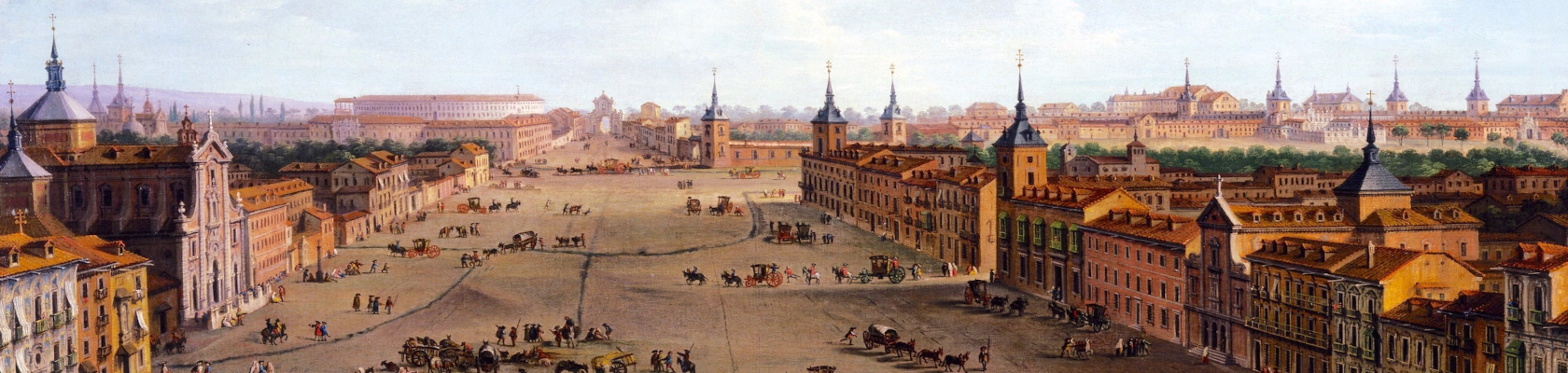
View of Alcalá Street in Madrid
Antonio Joli (c. 1750-1754)
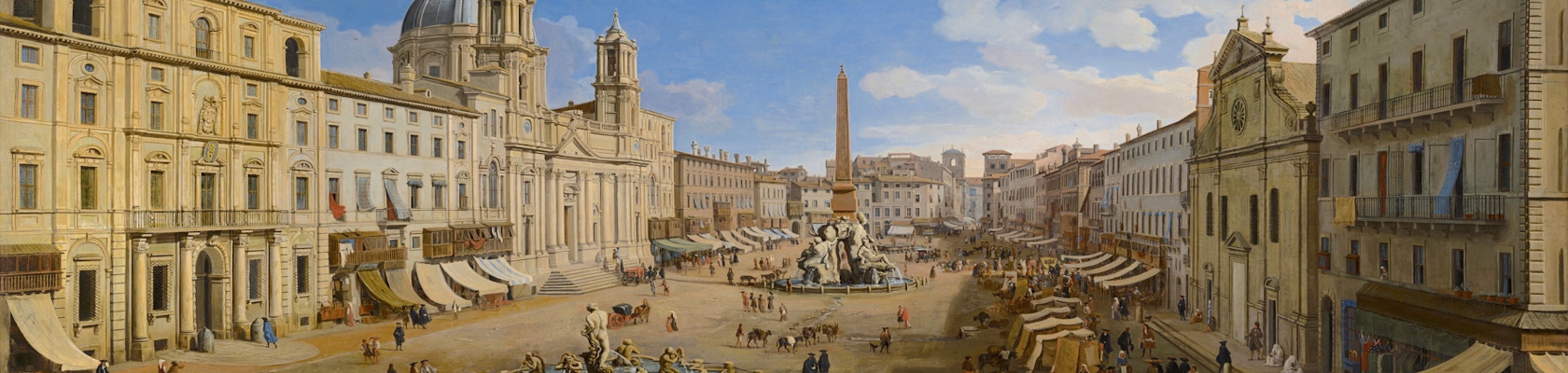
Piazza Navona, Rome
Caspar van WitteI (1699)
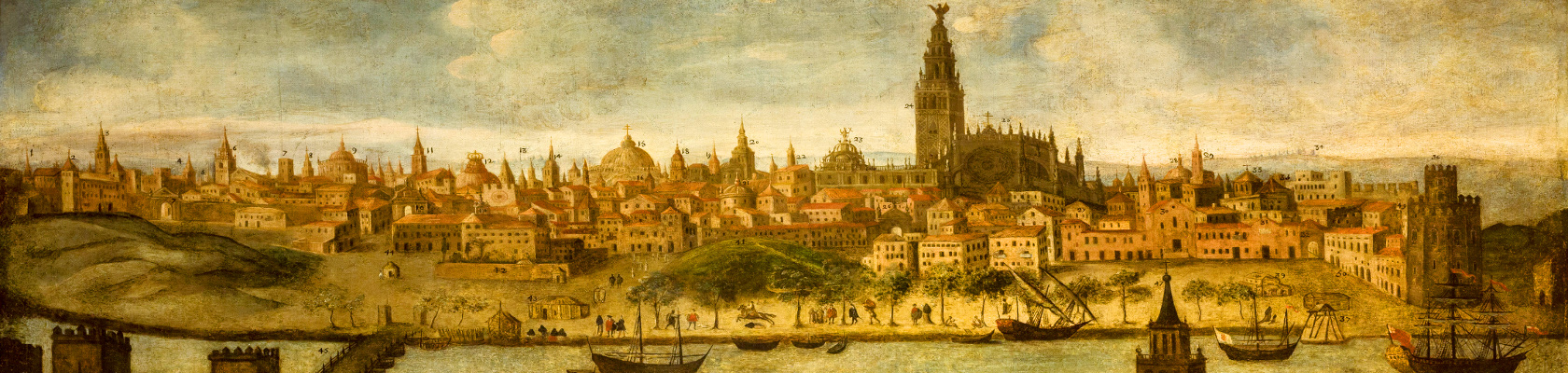
View of Seville from Triana
Anonimous (1726)
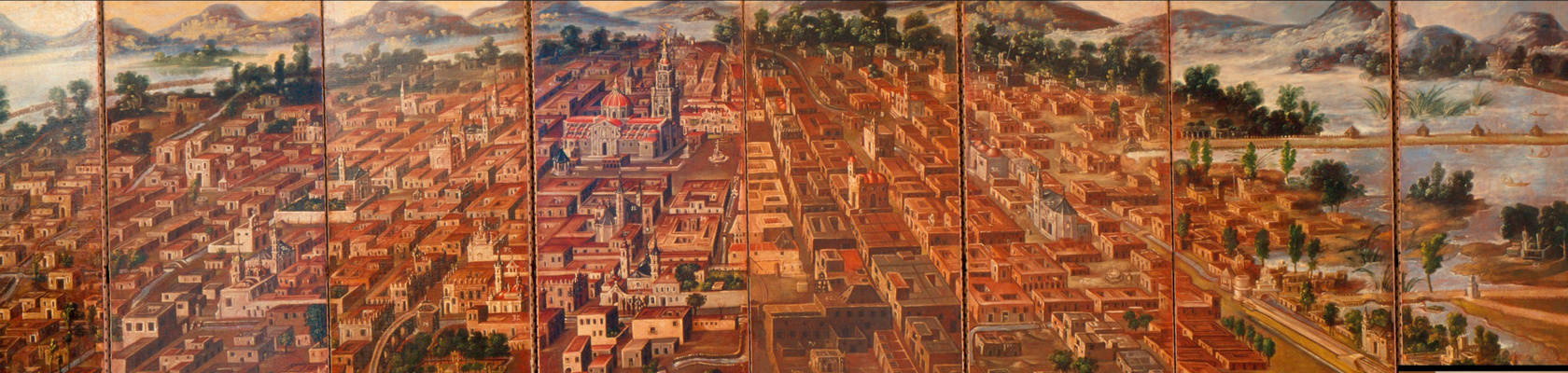
Screen of the most noble and loyal city of Mexico
Anonymous
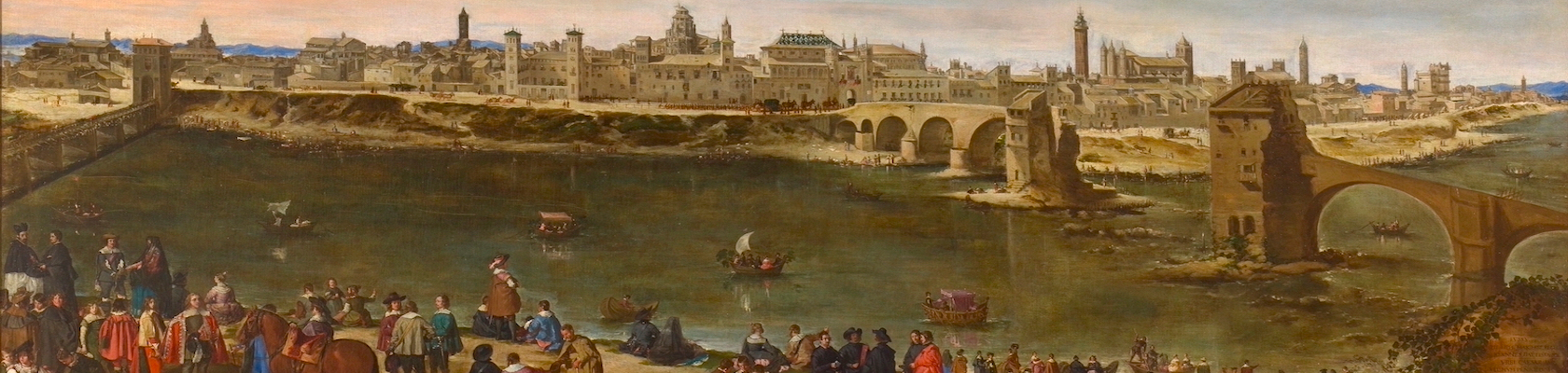
View of Zaragoza
Juan Bautista Martínez del Mazo (1647)
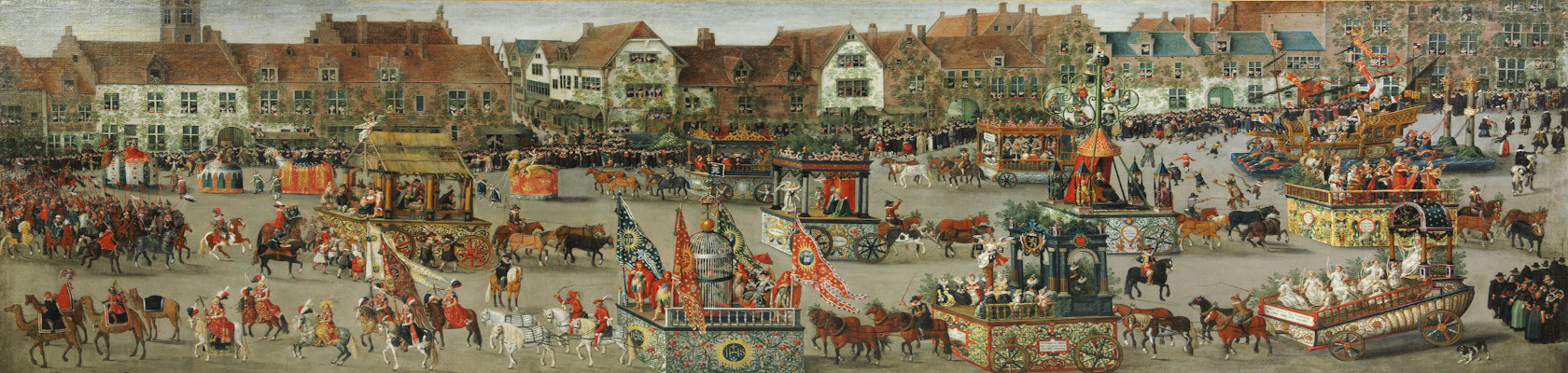
Isabel's triumph (Brussels)
Denis van Alsloot (1616)

View of Granada
Civitates Orbis Terrarum, vol. 1. Georg Braun & Frans Hogenberg (1572)
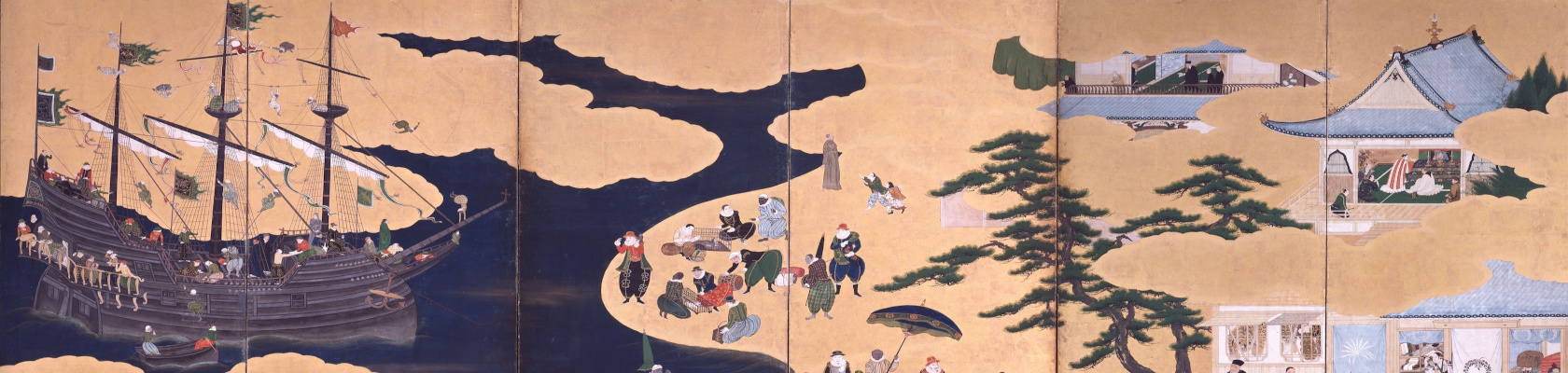
Nanban screen (Japan)
Kano Naizen (c. 1600)
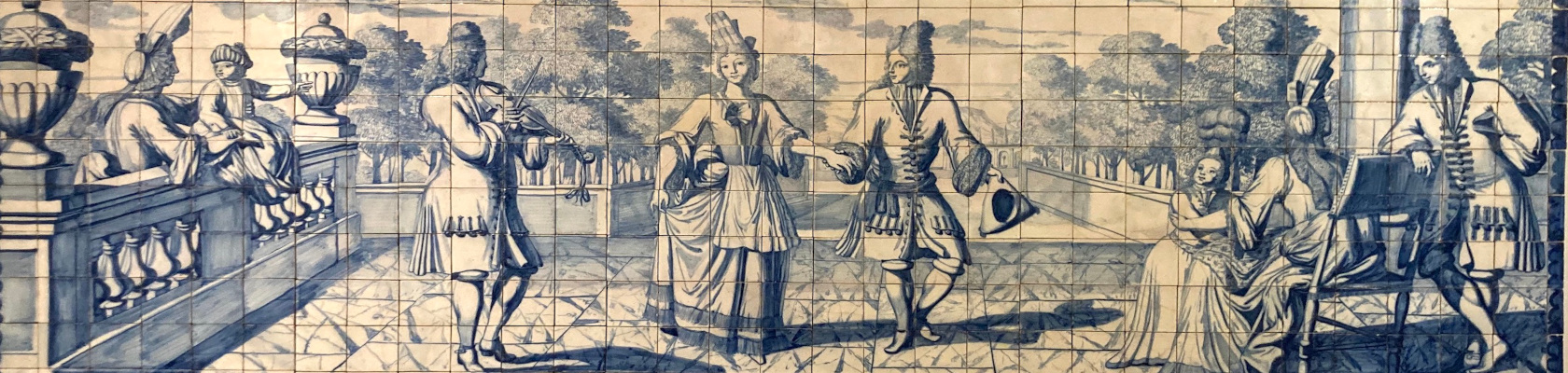
Domestic music scene
Museu Nacional do Azulejo. Lisboa
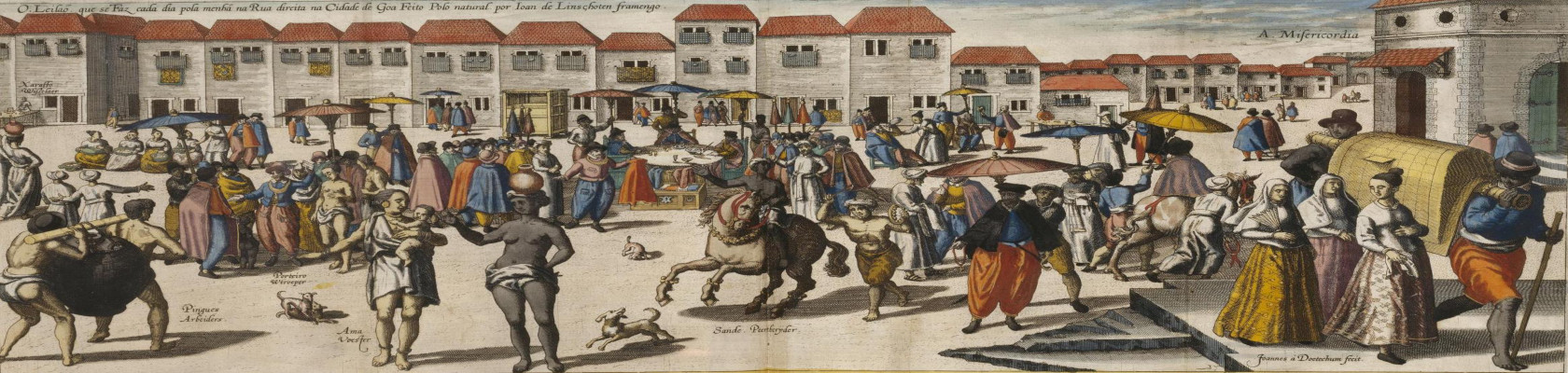
Market. Goa
Itinerario, voyage ofte schipvaert, van Ian Huygen van Linschoten naer de Oost ofte Portugaels Indien (1596)
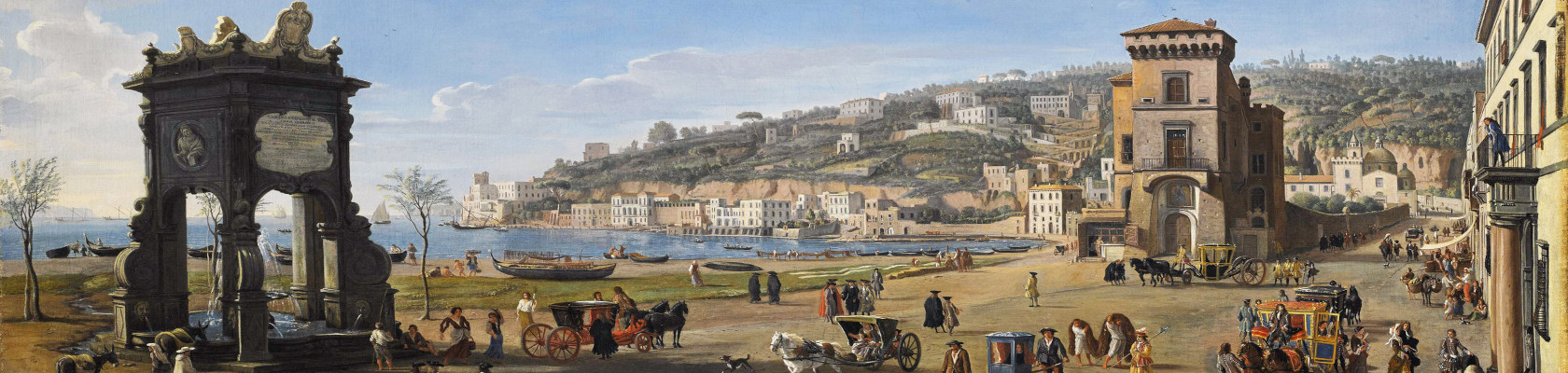
A view of the Riviera di Chiaia. Naples
Gaspar van Wittel (c. 1710)
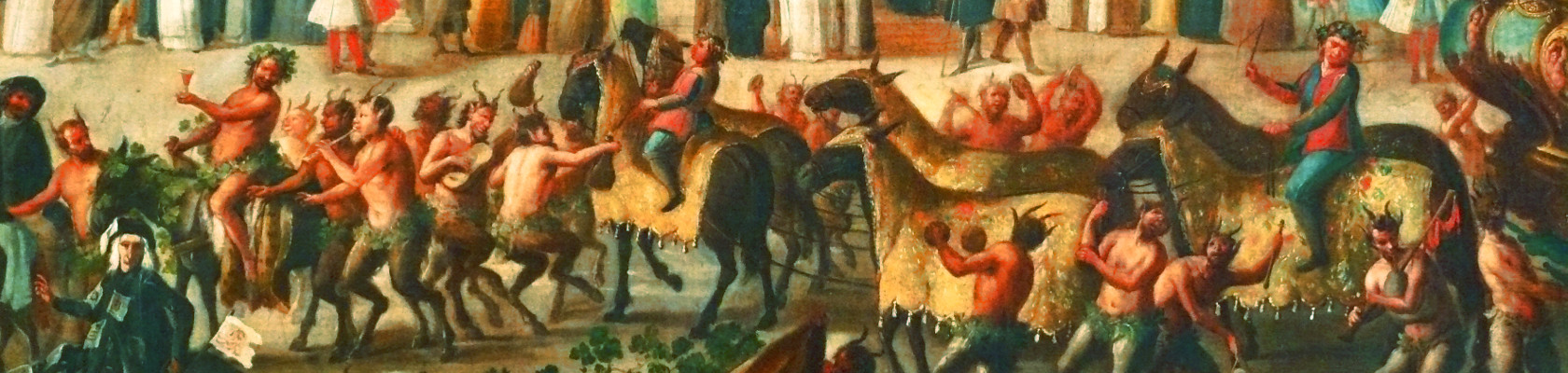
Chariot of the Common Joy (Seville)
Domingo Martínez (1748)
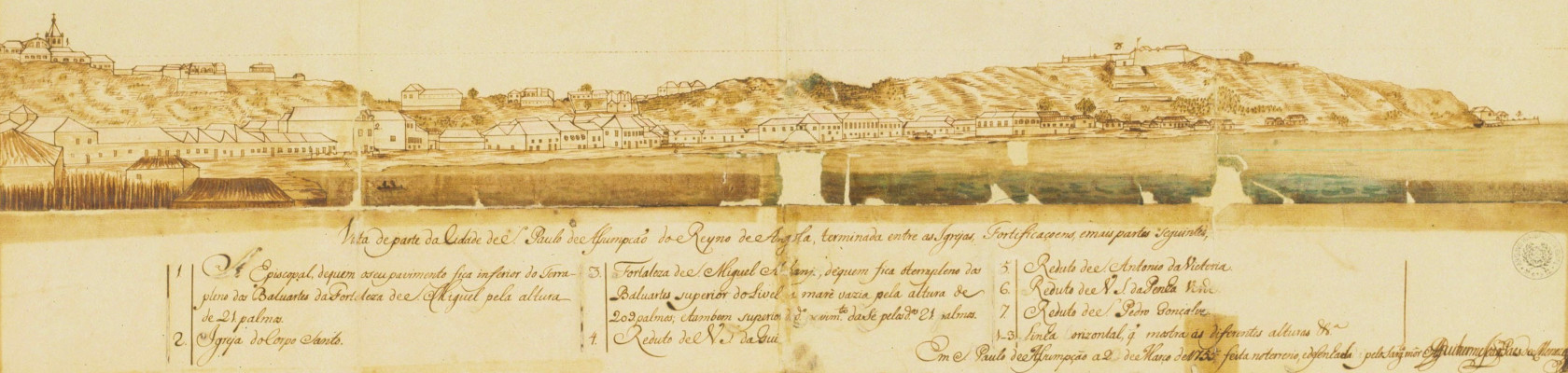
Vista de parte da cidade de S. Paulo do Reyno de Angola
Guilherme Paes de Menezes (1755)
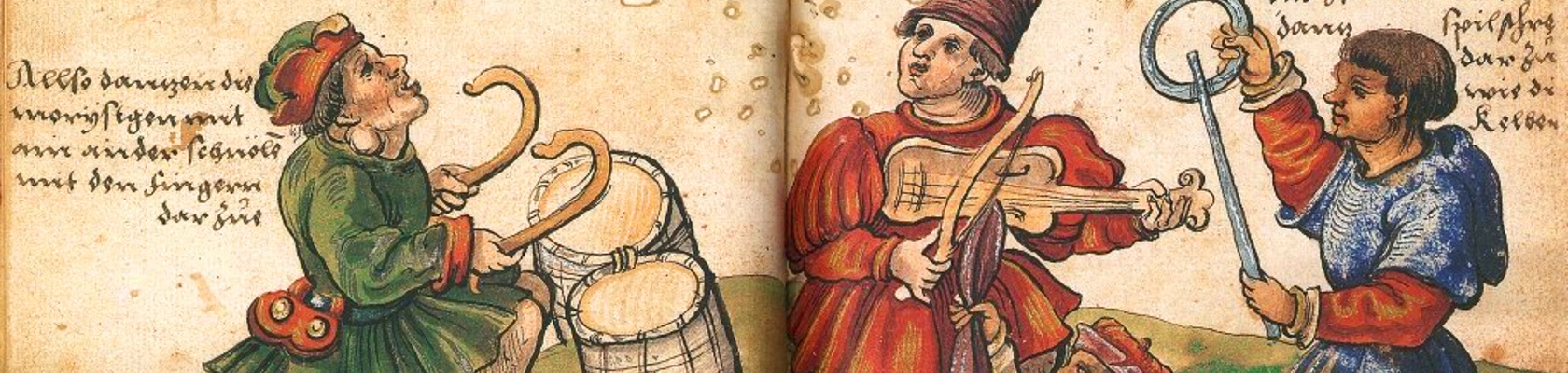
Moorish dance (Granada)
Trachtenbuch. Christoph Weiditz (c. 1530-1340)
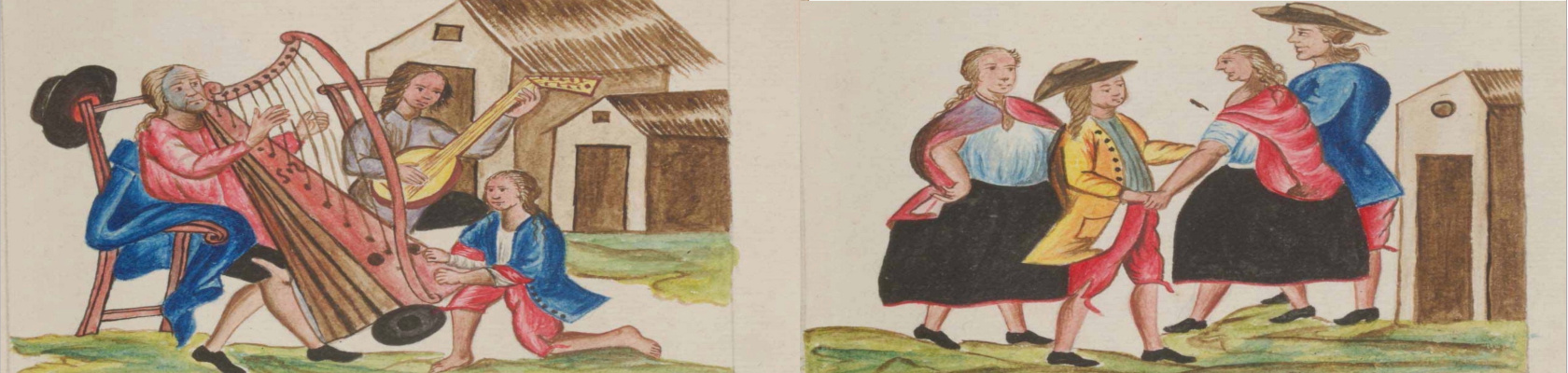
Chusco dance
Códice Trujillo del Peru o Martínez Compañón (c. 1785)

Constantinopolis
Hartmann Schedel (1493)
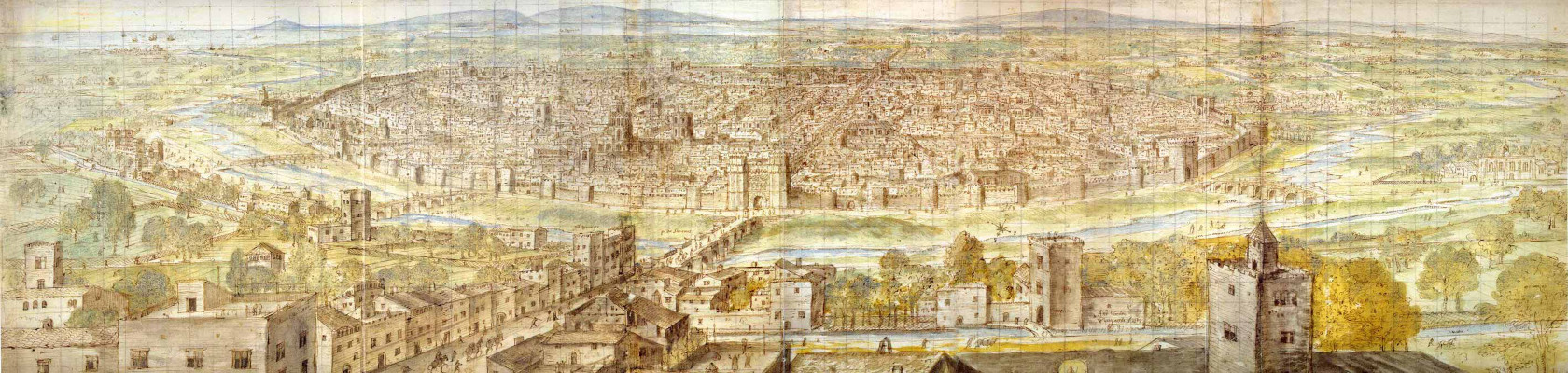
View of Valencia
Anton van der Wyngaerde (1563)
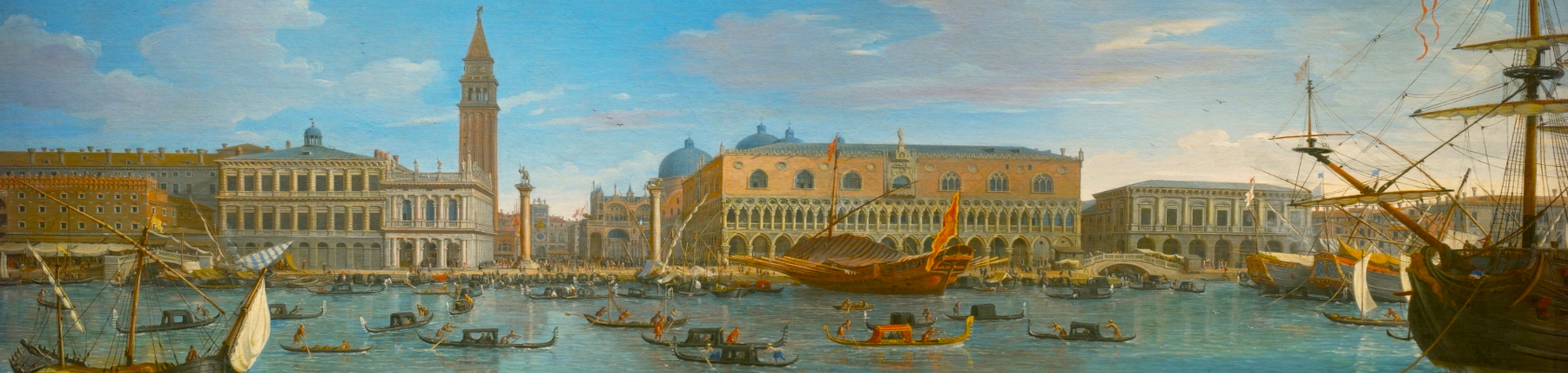
View of Venice from the Island of San Giorgio
Gaspare Vanvitelli (1697)

In the last quarter of the 16th century, different groups of slave minstrels, made up …

A document in the Simancas Archive provides us with a valuable testimony in which a …

In 1680, Inés Jacinta Manrique, “señora del donadío de la Torre de Quadros”, left in …

Confraternities at the church of San Cristóbal in Granada.
The phenomenon of the blind street singers in 16th-century Granada can be exemplified by the poet Gaspar de la Cintera, who was possibly a member of the confraternity of Our …
The Ordenamiento given by King Alfonso XI for the city of Seville, in 1337, provides us with an interesting indirect testimony of the nocturnal serenades in Seville in the first …
Read articleA document dated 1592, after the Moorish rebellion in Granada in 1568, gives us information about the musical staff of the Collegiate Church of El Salvador in 1537, through the …
The tolling of "del Alba" and "de Queda" were two of the most characteristic bell tolls in the regulation of urban life, both of which were easily recognisable by the …
The bassoon was introduced into the ecclesiastical musical chapels of Granada around 1800.
In 1693, the rules of the confratenity of Our Lady of the Coral, Rosary devotion, St. Joseph and St. Ildefonso were approved. It had its headquarters in the church of …
The inventory made in 1836, when the convent of La Encarnación in Granada was suppressed, included an organ located in the choir loft. This instrument and the tabernacle of the …
Read articleOn 17 May 1623, the Cathedral of Seville celebrated with great solemnity the publication of the Brief of Pope Urban VIII, in which he proclaimed St James the Apostle as …
A file kept in the Archivo Municipal de Granada, which records the conflict of interests between the luthier Francisco Morcillo and the city's luthier’s guild, gives us some interesting details …
On 15 April 1638, the Seville cathedral chapter celebrated for the first time the anniversary it had just instituted in honour of Pope Urban VIII. The vespers of the 15th …