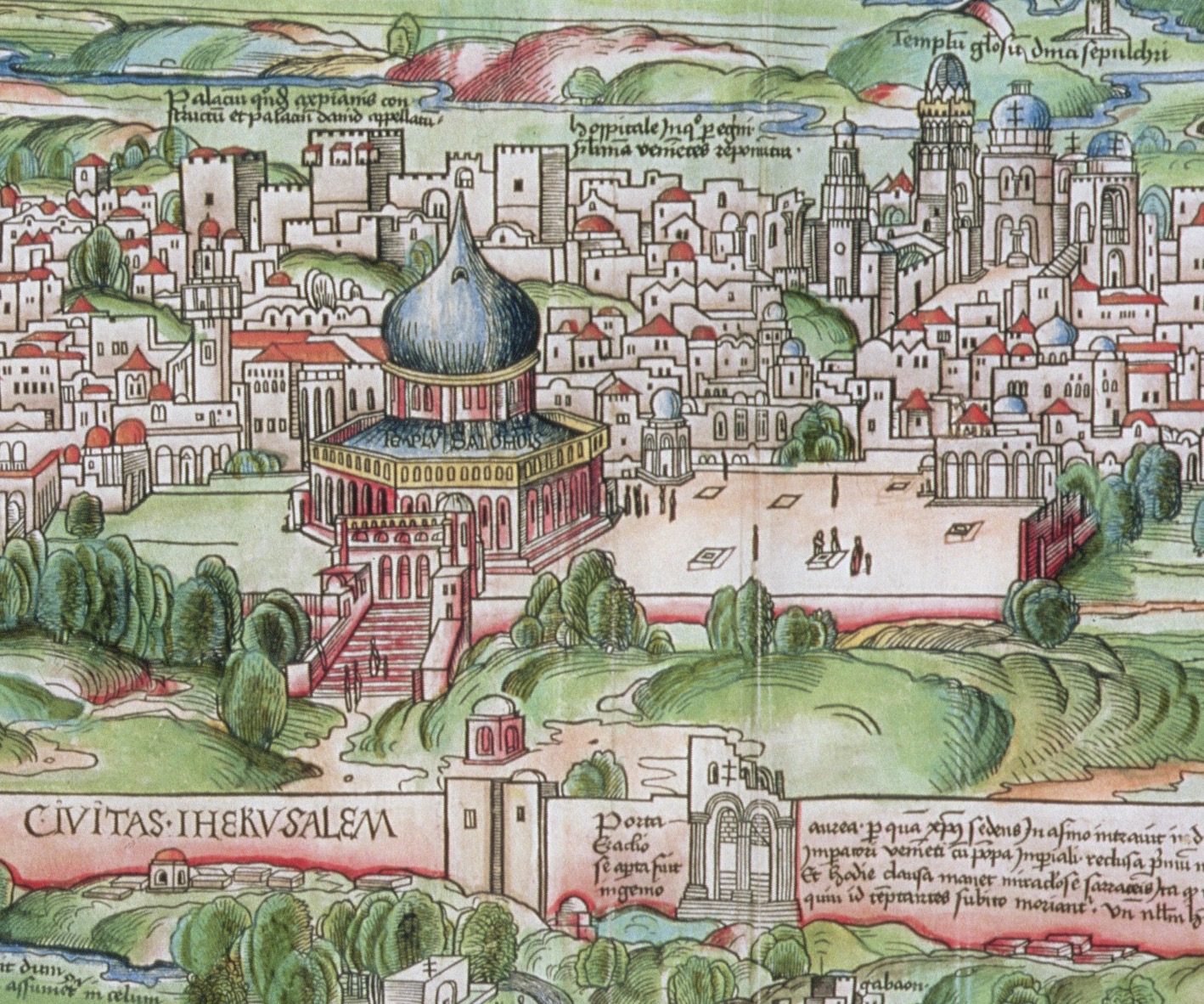
Mapping the senses in El viage de Hierusalem by Francisco Guerrero (Sevilla, 1592)


Mapping the senses in El viage de Hierusalem by Francisco Guerrero (Sevilla, 1592)

In this self-guided itinerary we follow in the footsteps of the composer Francisco Guerrero in the adventure that, at the age of 60, he undertook driven by his fervent desire to visit the Holy Land. Accompanied by his disciple Francisco Sánchez, they set out from Seville in the early summer of 1588, with the intention of arriving as soon as possible in Venice, where the composer planned to print a book of motets and another with a selection of his sacred songs. On 14 August they set sail for Venice, in what for them was truly the beginning of a journey in which they faced tribulations, but which was also full of emotions and new sensory experiences. On his return in August 1589, Guerrero, persuaded by “curious and devout people”, wrote in a simple prose that follows the canons of the Jerusalem genre the account of what he saw and experienced along the way. The first edition of the text was printed in Seville by Juan de León in 1592, making it one of the great publishing successes of the Modern Age, with at least forty-three editions, in Spanish and Portuguese, which continued to be printed well into the 19th century.

We have marked the outward journey from Seville to Jerusalem in purple and the return journey from Jerusalem back to Seville in orange.

The Olot-born musén Miquel Matas made his pilgrimage journey to the Holy Land in 1602, fourteen years after the composer Francisco Guerrero, following a different route until he reached the port of Jaffa. In 1604, he published the account of his journey in La devota peregrinació de la Terra Sancta i ciutat de Hierusalem, in which he included a very interesting appendix: "una recopilacio de les devocions que rezan y cantan los pares de S. Francesch ab los peregrins, fent les estacions per aquells sanctuaris y llochs tant asenyalat, dels sagrats misteris de nostra redemptio" ("a compilation of the devotions prayed and sung by the Fathers of St. Francis of Assisi and the pilgrims, making the stations by those shrines and places so marked of the sacred mysteries of our redemption". The chronological proximity between the journeys of Guerrero and Matas, who occasionally stayed and even used the services of the same people, always under the protection of the Franciscans, allows us to extrapolate temporally these prayers and chants to which the composer only alludes on very few occasions.

Date: 1-7-1588 / 1-8-1589
Periodicity:
Bibliography:

Zuallart, Jean, Il devotissimo viaggio di Gerusalemme de Jean Zuallart. Roma: Francesco Zanetto & Giacomo Ruffinelli, 1587.

Guerrero, Francisco, El viage de Hierusalem. Sevilla: Juan de León, 1592.

Matas, Miquel, La devota peregrinación de la Tierra Sancta y ciutat de Hierusalem. Barcelona: Gabriel Graells y Giraldo Dotil, 1604.

Francisco Guerrero (1528-1599). Opera Omnia. Vol. III. Motetes I-XXII. José Mª. Llorens Cisteró (introducción, biografía, estudio y transcripción) y Karl H. Müller-Lancé (semitonía y estructuras modales). Barcelona: CSIC, 1978.

Alejo Asenjo, Julio, "En torno al Viaje de Jerusalén de Francisco Guerrero", en Maravillas, peregrinaciones y utopías. Literatura de Viajes en el mundo románico, ed. Rafael Beltrán. Valencia: Universidad de Valencia, 2002, 113-150.

Bustos, Álvaro,  “Sobre el Viaje de Jerusalén de Francisco Guerrero (1588): algunos aspectos biográficos, bibliográficos y literarios”, Hipogrifo 9/1 (2021), 253–65.

Lama de la Cruz, Víctor, “Los viajes a Tierra Santa en los Siglos de Oro: entidad y fortuna de un género olvidado”, Revista de Filología Española 99/1 (2019), 89–112.

Created: 03 Jul 2023
Referencing: Ruiz Jiménez, Juan. "Mapping the senses in El viage de Hierusalem by Francisco Guerrero (Sevilla, 1592)", Historical soundscapes, 2023, e-ISSN: 2603-686X. http://www.historicalsoundscapes.com/en/itinerario/33.

Events

1. parish of San Nicolás
2. cathedral of Santa María de la Sede
3. various places
4. Real Alcázar of Madrid
5. Port of Cartagena
6. Port of Genoa
7. Merceria
8. St Mark's Basilica
9. port of Parenzo
10. Port of Zante
11. church of Agios Nikolaos Molos
12. Old port of Limassol
13. Limasol Castle
14. various places
15. Old port of Jaffa
16. church of San José de Arimatea y San Nicodemo
17. church of Saint George
18. White Mosque (chuch of the Forty Martyrs)
19. Qalunya (= Kulonieh = Qaluniya)
20. Jaffa's gate
21. Convent of Saint Saviour (Christian)
22. Cathedral of Santiago (Armenian Patriarchate of Jerusalem)
23. Zion gate
24. Church of the Holy Archangels (Armenian)
25. Monastery of Saint Saviour (Armenian)
26. Cenacle
27. Abbey of the Dormition
28. Al Aqsa mosque
29. Convent of Saint Saviour (Christian)
30. church of the Holy Sepulchre
31. Casa de la Veronica (VI station)
32. Epulon house
33. Simon of Cyrene is made to bear the cross (V Station)
34. The women of Jerusalem weep over Jesus (VIII Station)
35. Ecce Homo Arch (II Station)
36. Armenian Church of Our Lady of Sorrows
37. Herod Antipas House
38. Monastery of St. Nicodemus (Orthodox Greek)
39. Temple Mount
40. Pool of Bethesda
41. chuch of Santa Ana (Catholic)
42. St Stephen's Gate (= Lion's Gate)
43. Site of the stoning of St. Stephen
44. Convent of Saint Saviour (Christian)
45. St Stephen's Gate (= Lion's Gate)
46. Church of the Sepulchre of Saint Mary (Greek Orthodox / Armenian)
47. Grotto of Gethsemane
48. Garden of Gethsemane
49. Church of All Nations (Catholic)
50. Tomb of Absalom
51. Akeldama
52. Hill of Evil Counsel (Armon HaNatziv)
53. Fountain of Our Lady (Gihon Spring)
54. Pool of Siloam
55. Church of the Sepulchre of Saint Mary (Greek Orthodox / Armenian)
56. Site of the stoning of St. Stephen
57. church of Pater Noster
58. chapel of the Ascension
59. Greek Orthodox church of Viri Galilei
60. tomb of Lazarus
61. church of Betphage
62. Mar Elias monastery
63. Rachel's tomb
64. church of the Nativity
65. chapel of Saint Catherine
66. Milk Grotto chuch
67. Chapel of the Shepherds' Field
68. church of the Holy Sepulchre
69. Convent of Saint Saviour (Christian)
70. Cathedral of Santiago (Armenian Patriarchate of Jerusalem)
71. Church of the Holy Archangels (Armenian)
72. Zion gate
73. Monastery of Saint Saviour (Armenian)
74. Cenacle
75. Abbey of the Dormition
76. Al Aqsa mosque
77. St Stephen's Gate (= Lion's Gate)
78. Church of the Sepulchre of Saint Mary (Greek Orthodox / Armenian)
79. Site of the stoning of St. Stephen
80. church of Pater Noster
81. chapel of the Ascension
82. Greek Orthodox church of Viri Galilei
83. tomb of Lazarus
84. church of Betphage
85. unknown location
86. Jacob's Well
87. Maqam of Nabi Yahya (Shrine of Saint John the Baptist)
88. Ruins of a Byzantine Orthodox church
89. church of Saint George
90. unknown location
91. Daughters of Jacob Bridge
92. Various places
93. Umayyad Mosque
94. Sulaymaniyya Takiyya
95. Saint Ananias House
96. chapel of Saint Paul
97. unknown location
98. unknown location
99. unknown location
100. Nahr al-Kalb
101. Various places
102. Port of Tripoli
103. Port of Zante
104. port of Corfu
105. cathedral of Saint James and Saint Christopher
106. Port of Hvar
107. monastery of Saint Francis (Franciscans)
108. port of Parenzo
109. various places
110. Merceria
111. St Mark's Basilica
112. unknown location
113. unknown location
114. unknown location
115. unknown location
116. Port of Livorno
117. Old Fortress
118. unknown location
119. Port of Genoa
120. Old port of Marseille
121. unknown location
122. unknown location
123. Port of Barcelona
124. cathedral of Santa Cruz y Santa Eulalia
125. Santa Maria del Pi basilica
126. church of Santa María del Mar